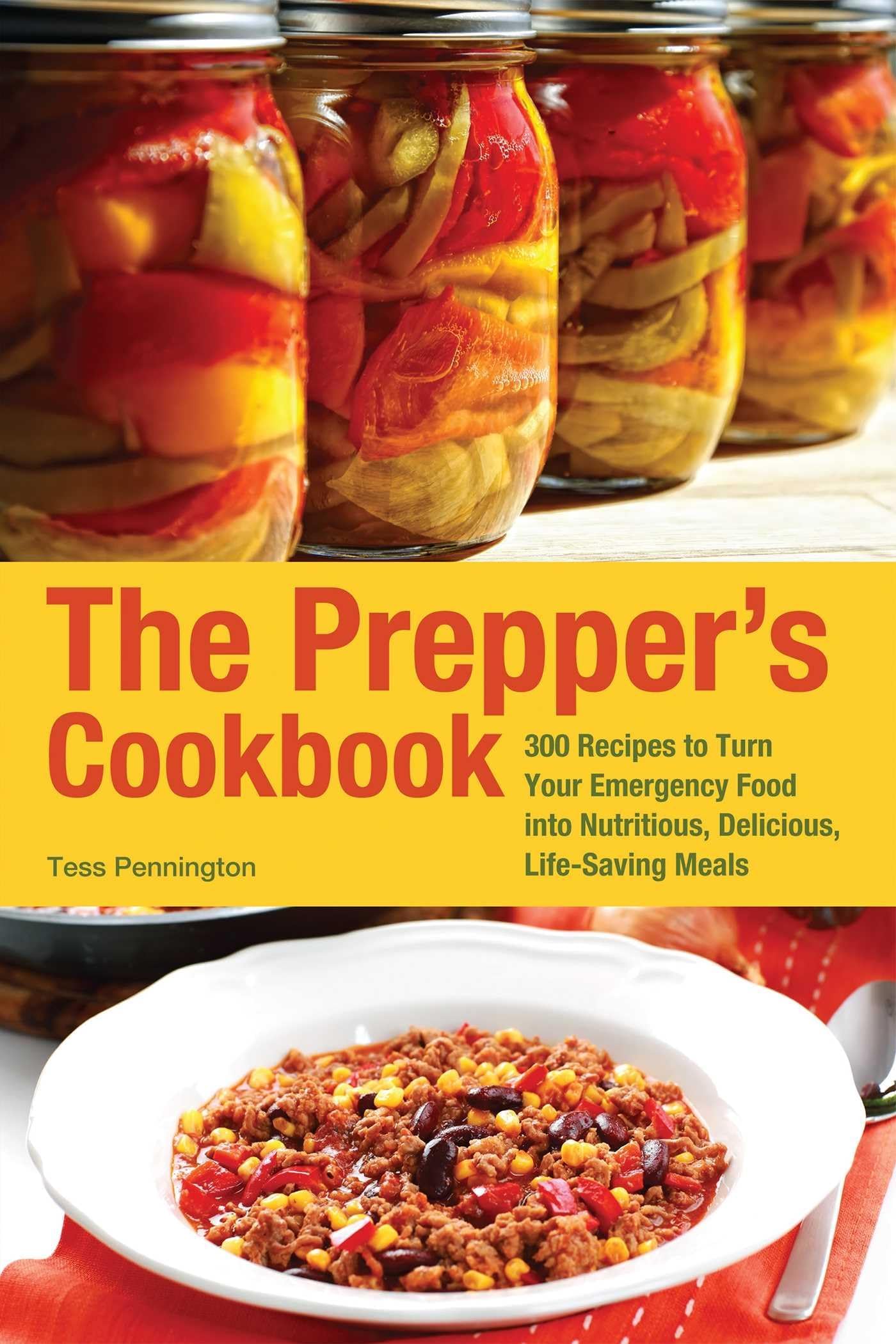
The Prepper's Cookbook: 300 Recipes to Turn Your Emergency Food into Nutritious, Delicious, Life-Saving Meals
Product ID: 1273707
📚300+ survival recipes
🥫20+ canning charts
🛠️Emergency pantry checklists
Desertcart purchases this item on your behalf and handles shipping, customs, and support to QATAR.
🥘 Turn your emergency stash into a gourmet survival feast!
The Prepper's Cookbook offers 300+ practical recipes and expert guidance to help you efficiently stock, organize, and cook nutritious meals from emergency food supplies. Featuring canning charts, pantry checklists, and DIY flavor hacks, it empowers preppers to transform freeze-dried, dehydrated, and shelf-stable ingredients into delicious, life-saving dishes for any disaster scenario.


| Best Sellers Rank | #149,806 in Books ( See Top 100 in Books ) #84 in Disaster Relief (Books) #125 in Survival & Emergency Preparedness #167 in Canning & Preserving (Books) |
| Customer Reviews | 4.5 out of 5 stars 960 Reviews |
J**R
Concise, comprehensive jam-packed powerhouse of a cookbook
I just received this book and sat down for several hours checking the entire book. The beginning has a concise description of water bath and pressure canning. Even if you'd never done it before, you could learn it from this section. I can say this with confidence because I've been canning for more than 30 years and know what a beginner would need. This book is aimed at people who already have an interest in stocking up so it uses items commonly found in a prepper's stash. It's a well-known truism that you should rotate your food storage. So, if you've been afraid to try it, this book should motivate you to actually make soups, stews, meat dishes from your stores. I especially liked the section on making your own dried soup mixes! I have food allergies and most commercial dried soups contain things I can't have. This book solves that problem and expands my possibilities. The recipes for dehydrated beef jerky and fruit leathers look good. I would have liked some information on what to do about dehydrating without power, just as she included information on canning outside on an open fire.But this is a small complaint compared to all that this book does contain. There is also a section on substitutes that would help a cook any time there's something missing in the pantry. Don't have butter? Recipe calls for buttermilk and you don't have it? Don't have whipped cream for a dessert topping? There are instructions on how to make your own substitutes. I tried the whipped topping already. Not bad! Actually, pretty good. It's made from dried milk, something most preppers store. There is a wonderful section on creating your own herbal mixtures for different recipes. What if you couldn't get your favorite McCormick Spice blend? Check this section. The book is arranged logically, with sections for breakfast, lunch, dinner, beverages and snacks. There are recipes for homemade saltines, homemade vanilla wafers, and directions on how to turn quinoa into a really tasty sounding breakfast cereal. There's a recipe for homemade corn flakes! There are directions for pressure canning meats. Only one recipe concerns me. The meat loaf recipe has bread crumbs in it and the USDA has stated that putting wheat products in pressure canned recipes increases the chance for botulism. I would like to know if this recipe the author included really is safe because based on what I know, canning a solid chunk of meat loaf like this may not be. Still, I could be wrong. There are also instructions for canning hot dogs. I am an experienced cook, canner, and prepper and this book had plenty of new ideas for me. Finally, I am impressed with the author's credentials. She worked with the American Red Cross specializing in the Armed Forces Emergency Services center and was trained in disaster management. With personal experience in helping manage aid for families after 9/11, the author says that and seeing families struggle during hard economic times has convinced her of the need to share her expertise in helping others prepare for emergencies. If I hadn't been convinced of the need already, this book would have convinced me. This book is common sense. It's not screaming doomsday. It's teaching survival, but it also teaches frugality, how to stretch your food to feed more people, what to do if you run out of certain things. This book is hope, but more than that, it's a tool useful to anyone who wants to do more with their food storage. After all, we aren't creating a food museum in our pantries. Also, who says you have to eat boring or bland food during a crisis? With this book in hand, you can practice now what might save your family later. (I've been through a fourteen day power outage after a horrible ice storm here and have personally used many of the ideas in this book--but I still wish I had this book sooner! It would have saved me some trial and error.) So five stars for this comprehensive, jam-packed little powerhouse of a cookbook. In these difficult times, learning how to do more with less is a good thing.
C**A
Preppers Take Note: Great for reference and food storage use.
This book is awesome. I've got a lot of prepping books and while they talk about water storage and how you can "lightly chlorinate" your water for storage, they fail to tell you what that means. This book covered everything about food and water storage in about 30 pages. A quick flip through can tell you how to can your own food and tell if home canned products have gone bad. The amount of bleach needed for water treatment and the appropriate size oxygen absorbers to use for different foods in gallon and 5 gallon buckets were also great reference items. It's a space saver for sure. I'll be putting a copy in my BOB. I loved the fact that it had recipes for items like ketchup, saltines and plum sauce so you can make them yourself and not waste extra storage space on them when you can make them yourself from the other items you're already storing. There's also 20 recipes on rice and beans, food storage staples. This is really nice for me because I want to start using more beans and less meat as the beans are so easy to store. Keeping meals fresh and interesting when SHTF is not something that should be overlooked. The second half of the book are a bunch of recipes to help you start using and rotating your food storage items in case you haven't already. I love quinoa and the breakfast recipe in here is amazing. The only thing I didn't like about the recipes was the use of processed foods like Velveeta and boxed rice mixes. But these items could easily be substituted with freeze dried cheddar cheese and your own rice mixes. That being said, the book is well worth the money for just the first 30 pages alone.
�**T
Absolutely great book
I'm actually fairly impressed with this book. While it says it's 300 recipes, it's actually a LOT more. There's really good lessons on canning and preserving. My mom used to preserve the cherries from a tree in our yard when I was a kid. I don't do it now because she had no idea why she did it the way she did, and the very real worry of botulism scared me off. But the tutorial (it's not just info, it's a complete education on the subject) is quite complete and concise and makes me wish I had a cherry tree in my own back yard. It comes with charts on a huge selection of fruits & veggies and how to can/preserve them. (It also goes into meats, but I have no interest in that). I was also pleased to see it didn't obsess over beans - so many nutrition or survival or prepper things focus on beans cuz they last forever, but I hate almost all beans. I might have to eat them if things do go south, but the major flaw in that thinking, imo, is that food may very well be catch as you can, so to speak, and you'll need to know and understand a lot more than beans. This book, happily, goes way beyond just beans. The only flaw (hence the 4 stars), to my thinking, in this book is that it pretty much assumes you're going to be at home when disaster strikes. While grocery lists and pantry stocking are useful and important, it's not the only possible scenario. Since I already have my at-home setup as complete as possible, I was looking for more info on survival while not at home base, when you won't likely have normal staples like baking soda, flour, etc. Having said that, I still find the recipes in this book very useful because it still gives tons of useful at-home info and guides and those charts are fantastic. And there's still stuff you could learn - for example, I'm very into freeze dried or powdered things, like meats and butter and such, but even I didn't know that powdered shortening was available. So even tho it focuses mostly on at-home perspective, there's still plenty that could be useful if you weren't at home, and lots of info even if you're already setup at home. I think it's well worth the buy.
D**A
Best in class prepper cookbook
I first read this book on Kindle, then decided it was so helpful I wanted the paperback edition. I went for more than a week without power in a bad thunderstorm, so I know a little about what it's like. I thought I knew something about prepping, but I learned a lot more from Ms. Pennington. Lots of really helpful suggestions about things I would never have thought about - like cooking and then dehydrating rice so that it's quick and easy to prepare in the first stages of an emergency when you're hungry but too drained to cook. I also really love her dried soup recipes and other jarred, pre made dishes that amount to little more than "just add hot water." I appreciate that she provides the details of the procedures she's describing rather than assuming everyone already knows how to do it. She's clearly thought this all through more than once, for example, telling you to bake the cooked rice you're going to dehydrate when you're putting something else in the oven so you don't waste your oven time. I never thought about cooking rice in the oven rather than on the stove.
N**S
The AWESOME Prepper's Cookbook
The best thing about this book is it actually teaches people how to cook, using real food (as opposed to manufactured processed) fake food. Many of the recipes in this book are recipes my family has used for years, using basics, like flour, sugar, honey, and preserved and dried garden foods. There are a few problems in assuming that people have refrigerators and freezers, which won't be working if the grid goes down. We live off grid, with minimal solar power to run laptop, fan, music and TV. We have propane for cooking and heat, but also heat and cook on a wood stove. Not much will change for us if the grid goes down, because we aren't dependent on it. We grow our own fruit and vegetables, bees (honey) and raise our own meat, and also hunt and fish. We do buy flour, coffee and tea. We live in live in southern California, so we don't need much heat and a fan is all we need in the summer. We do a lot of cooking outdoors in the summer to avoid heating up the house. Most of the recipes in this book are very useable off grid, whether cooking indoors or outdoors. This book is awesome. I would highly recommend it to anyone.
D**P
Must have for preppers
This is SO much more than a cookbook. I've been buying a lot of prepping books, and too often I'm disappointed by what's missing. This book packs a lot of practical information. Beyond recipes, it recommends tools, efficient cooking methods, preserving and even quantities of each type of food in order to feed a family for a month. I'm back to buy a copy for my adult son.
M**3
Prepper's Cookbook
Okay, I am a closet prepper! I don't believe the end of days or economic collapse is at hand. We had our house destroyed in a tornado a couple years ago, since then I can't stand not being ready for a disaster that could make life difficult for weeks or possibly months. I enjoyed reading this book because it was written with economy and realism in mind. The food items are meant to be used as a normal part of your pantry and the recipes give the reader a really simple way to keep variety and taste in the menu. If you are like me and prepping is not taking over your life, this is a great little book to help keep you and your family prepared for an emergency without hurting your household budget. I have slowly increased our pantry by adding small changes to our weekly trip to the grocery store. I recommend this book.
D**R
It’s okay
I have to admit that I was a little disappointed with this book. I think what turned me off to it is that the canning recipes in the beginning are a little suspect. At best, they are incomplete. I wouldn’t depend on this book at all for home canning; focus on USDA tested-safe methods instead, and go with one of the approved canning books with rigorously tested canning recipes (like the Ball Blue Book, USDA Complete Guide to Home Canning, or the University of Georgia’s So Easy to Preserve). The cooking recipes did give me a few ideas, especially for how to use my dehydrated food stores, so that was a bit of saving grace. But I was confused by all the recipes calling for 12.5 ounce cans of chunk chicken. I can my chicken in pints, and I don’t think the author is talking about pint jars of chicken. I think she means chicken you buy at the grocery store. A lot of the canned goods in the recipes also appear to be store-bought, not home-canned products. I wanted ways to use my own canned goods. I think this book would have been better if she hadn’t tried to take on the canning how-to (especially the off-grid canning how to!) and instead just focused on how to best use one’s food stores, whether home-canned or dehydrated or freeze-dried or store-bought. Most preppers I know do stock some canned goods from the grocery store, and it’s good to know how to put them into rotation, but they also do a lot of their own food preservation. There are plenty of free Kindle books on how to make unobjectionable meals from grocery store goods if disaster strikes and you still have to put food on the table for your family.
B**L
Love it
Very well thought out, with useful arrangement, layout, and index. I am pleased with both the nature of the recipes (lots of options if you don't have one thing or another), excellent recommendations of how to get started/add to your existing food stores, some great tips and options (I would never have thought of some of them), easy to read and follow directions, a hugely diverse range of recipes (if your palate cannot be satisfied, you are way too picky) and more. The prep messages in the first portion of the book send just the right message in just the right way. I would eagerly buy other prep works by this author.
J**Y
Excellent cookbook when cooking from your stored food
Excellent cookbook when cooking from your stored food. American measurements, and some ingredients we can't get as easily but I liked it.
C**H
Miam, des recettes très bien assaisonnées
MMhhh on s'est vraiment régalés avec ces recettes ! J'ai enlevé une étoile parce que le livre est en papier type journal et aucune photo et que c'est un peu sobre. En dehors de ce bémol le livre est excellent. Il montre comment offrir à sa famille des repas variés et savoureux en utilisant uniquement des ressources alimentaires propres au prepping (un mouvement qui consiste à se préparer aux pires alternatives et donc à l'indépendance alimentaire). L'auteur explique donc aussi les principes de la préservation des aliments, comment et dans quelles proportions faire des réserves et Tess Pennington est une référence dans le domaine de toute façon. C'est mon second livre de cette auteure. Bien sûr pour nous en France, bien des recettes échappent à notre culture mais alors les sauces sont surprenantes dans les mélanges proposés mais vraiment savoureuses (attention un peu trop salées pour nous, à réguler un peu).
R**R
but slightly odd friend loved it.
It wasnt for me, but slightly odd friend loved it.
S**G
A great resurce.
A great resource. just when you thought you knew enough, this book let's you in on a few new secrets and helpful hints. A must read for any Prepper.
Trustpilot
5 days ago
1 month ago