
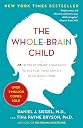
The Whole-Brain Child: 12 Revolutionary Strategies to Nurture Your Child's Developing Mind
Product ID: 1374412
🎁Ideal gift for mindful parents
📚Bestselling parenting guide
🧠12 brain-based strategies
Desertcart purchases this item on your behalf and handles shipping, customs, and support to QATAR.
🧩 Connect the dots of your child’s mind — because every moment counts!
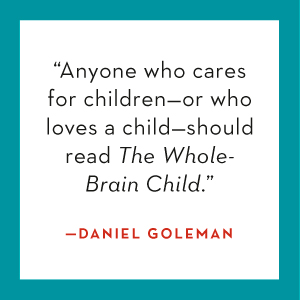
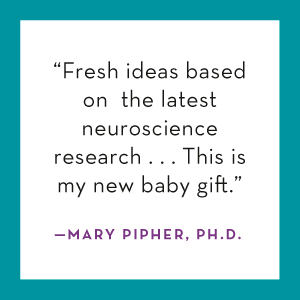
The Whole-Brain Child is a New York Times bestseller that distills groundbreaking neuroscience into 12 practical strategies to nurture healthy brain development in children. Authored by experts Daniel J. Siegel and Tina Payne Bryson, this book empowers parents and caregivers to transform everyday challenges into opportunities for emotional and intellectual growth. With over 21,000 glowing reviews and top rankings in child psychology categories, it’s the definitive guide for raising balanced, resilient kids in today’s complex world.
| Best Sellers Rank | #282 in Books ( See Top 100 in Books ) #1 in Medical Child Psychology #1 in Popular Child Psychology #1 in Children & Adolescent's Learning Disorders |
| Customer Reviews | 4.7 out of 5 stars 21,517 Reviews |
S**.
game changer for parenting
This book has changed the way I parent. I have two daughters, 1 and 6 years old. The oldest struggles with elevated levels of anxiety to the point where we decided to have her start chatting with a pediatric therapist to help her (and us) better navigate the tough moments. Her therapist recommends that all parents read this book. I am so thankful that I did. I not only understand more about my daughter’s brain and thought process and emotions, but I also understand more about myself, and how my handling of situations has projected my own anxiety onto her. The good news is that we can actually change our brains by forming new neural pathways, and it’s never too late to start. So you can take situations that normally upset your child (anxiety, fear, anger, violence, hyersilliness, nervousness, inability to focus – truly anything) and use these occurrences to help them form new neural pathways that in turn allow them to better cope with challenges. And it’s helped me in the same way. I’ve noticed I am better able to manage high-anxiety situations in general. This book does an amazing job at explaining just enough of the science to help the concepts make logical sense. For me, this makes them easier to remember and implement. After reading this book, I *get* it. And that makes all the difference in the world when you are in an emotional moment, struggling to best navigate not only your little one’s feelings but also your own. Beyond the concepts, this book provides practical, easy to understand techniques. And darn it if they don’t work. I noticed such a rapid response with my 6-year-old that I started using some of the approaches with my 1-year-old, and there was an immediate response with her as well. Getting such quick and positive feedback makes you excited to keep using the approaches. And it’s really set up to be as easy as possible. There is a helpful “HOW TO USE THIS BOOK” section at the beginning, I’ve included some snippets in my photos. I think this book is a game changer for parenting, and I wish I had read it earlier. I recommend this to any parent, new or veteran.
S**G
Easy to understand but vital skills
Normally I only review my favorite-closed door romance- but after this book came up in conversation and I realized it really does deserve a review. I will recommend this book, always. I am so glad a friend recommended it to me a handful of years ago. While it is yes, written by a doctor, you do not need to be a neuroscientist to understand it. I believe every teacher, parent, foster parent, grandparent, aunt, uncle, honorary “family” etc., who ever interacts with a child can benefit from reading The Whole Brain Child. In easy to understand language, Dr. Daniel Siegel and Sr. Tina Bryson breakdown what is going on in a child’s brain, how the brain develops and processes things, as well as strategies to help connect to children and guide them as they grow intellectually and emotionally.
T**M
Unbelievable read! So much to learn as a parent!
This book is amazing! It has allowed me to explore and parent my child in ways that were unimaginable. From simple things to complex things, it has taught me and my wife how to approach situations to achieve a much more positive end results 10x faster. Ive always thought of myself as a "know it all" parent (I really dont its just how I was raised and how my family was raised) were hard working people and rarely accept anything for free or without payback. Anyways, with that being said, my wife and I are excellent parents, not only because were big headed, but because we hear it all the time. We live it through the behavior and the respect our children have. However, nobody is perfect and until I read this book and explored the brain like never before, even though my children are amazing, I was lacking in the actual consciousness of my parental decisions from a whole brain perspective. Usually you tend to tell children what is your word and say no matter what you respect it, but this book takes a different approach. Now it doesnt make you a weaker parent and doesnt take away the fact that you indeed are the parent and you demand respect, it just takes different approaches on how to transcend that to your child in a way that allows them to be nurtured from a brain perspective rather than drilling them saying BECAUSE I SAID SO! Children are very logical yet cannot think and understand your logic. It sounds funny but when your child ask you why the grass is green and you say because it is, and they keep asking why? What makes it green? Why doesnt it keep growing to the sky? Why do you have to cut it? These are all LOGICAL questions because they are quite inquisitive. However, trying to explain to your little one why they cant have something at that specific time (maybe a juice or some milk because they have to wait until dinner) just simply will not do the trick. They dont fully understand the explanation and their brain is connecting the dots because they are flooding with emotion. The book does explore a lot that I was hooked after the first page! GIVE IT A READ! BE OPEN MINDED! HAVE FUN! ENJOY YOUR CHILDREN! NURTURE THEM! THEY ARE OUR FUTURE!
M**4
Intimidating science, translated beautifully for the common reader, and applied astutely to parent-child interactions.
This is a very well conceived and executed book, and very worth your time. The authors do a tremendous job of translating neurobiology and cognitive psychology into basic language for a general audience, for use in direct child interactions. Through each of their 12 strategies for understanding and interacting with "The Whole-Brained Child," the authors begin by describing in an unintimidating manner the portion of the brain and its function that will be subsequently discussed from a behavioral standpoint. From here, they use that behavioral basis and give very detailed examples of how to handle child behavior stemming from the associated biology, referring back to the brain as a reference point rather than as the focus. The point of the book, all science aside, is in dealing with certain child developmental features and behaviors (such as implicit memory, tantrums, fear of failure) by connecting with children directly. The science is used to serve as a backdrop but is a fascinating addition to what otherwise would be a simple behavioral book. Instead of just saying HOW to interact with children, the authors show us WHY, which lends a much greater and more nuanced understanding to the how. This book provides a unique opportunity to read about everyday situations with children and relate them quickly and easily to a neurobiological level. Though the authors say the book can be for direct childcare practitioners (such as teachers and daycare workers), the obvious target is parents. Here there are some issues. The book seems to be written for a white, suburban, middle class parent as opposed to the general population. Additionally, the practicality of some of the strategies is not immediately apparent, and the amount of effort required for many parents will be substantial - a paradigm shift for some ways. The illustrations are helpful in showing the dos and don'ts (not labelled as such, thankfully), but I found myself thinking the don'ts were many parent's default. The strategies really are a shift in thinking and require a lot of skill and investment to execute, but they are definitely achievable. In no way does this book alienate parents with over-expectations. I also felt some situations I felt were not addressed adequately. Most of the examples of child behavior and parental involvement deal with more mundane, everyday occurrences from the 'average' child. If you are interested in how to explain to your child what death is, this book doesn't venture into those dangerous waters. Nor does it address more difficult children. Additionally, the section of bringing implicit memories to the explicit is somewhat suspect in its claims and its basis, which some may find hypocritical. If implicit memories are necessarily altered as the authors say, why would a parent with altered memories of an incident helping a child reconstruct the child's own altered memories of that same incident serve to help the child? I wonder too about parental inconsistency when using these strategies. Again, they are intensive and hard to do in the moment the behavior is being exhibited by the child. I do believe these are not major issues, however. The authors' stress on underlying the importance of connection, integration of thought, and mindset make most of the above manageable simply by establishing a trusting baseline relationship with the child. Overall, I believe the pros of this book outweigh the negatives, though they should be noted. The authors' ability to successfully and fluently translate incredibly intricate science to the common reader (no college degree seems necessary for reading, but a level of literacy is assumed) is no small feat. It makes me wish more laboratory experiments that have real-world implications can be taken by researchers into the hands of the people that actually need and use them on a daily basis. Parents will find the strategies difficult to implement and will certainly encounter situations not touched upon here, but this is well worth the read. And it won't take you long...the writing style is easy to follow, the science unobtrusive and accessible, and the situations are often in dialogue-form and wonderfully vivid. Along with the illustrations and a very helpful appendix at the end denoting in which age ranges a parent should expect certain behaviors to manifest in, this book is a win.
B**N
great read and great information!
Loved this book, it really made me look inwards into my parenting style and how to hand conflicts. I'm excited to use this book as reference during my child's entire life. Highly recommend!
S**C
If parents read just one parenting book, this is the one.
This book was referred to me by my friend who is a family therapist and is well known across the child psychology industry. Dan Siegel describes the functions of each of the parts of the brain, then focuses on integrating the different parts. He uses examples of common child behavior / situations and explains how the brain is working in those moments with those behaviors, and what we can do as parents to understand how their brain is functioning in that moment, how to communicate to the child in the situation in the most receptive way, and how to use these situations as learning and developing tools. Like when a child is overly emotional or in a tantrum, you have to work with their right brain emotion in those moments because its in control, and you can later introduce the left brain logic. I know, thats probably one of the more basic concepts, but he does a great job of explaining the science behind the actions. What he talks about totally makes sense intuitively, but see it laid out and explained in a scientific way was pretty fascinating. Understanding the developing brain has been sooo helpful in my understanding of how to be a better parent. For me, having this foundation of knowledge is so much more powerful than reading through a million other "parenting" books and trying a bunch of different techniques. I feel so much more confident in the decisions I'm making as a parent, and I know how to respond to my children across a spectrum depending on their personality or the situation. It realllly helps reduce the frustration on BOTH sides. Plus, this is also so helpful to understand other people in your lives. There were a few 'ahha' moments in there in which I totally understood what happens between two adults during a heated discussion. I do think that he spends a bit too much time on the wheel- hub/spoke analogy. He describes each of the spokes essentially as a piece of our personality, but they don't individually define who we are. They are all connected and make us whole. I may not be describing it exactly properly, as I might have zoned out on that piece, but its the one part where he deters from the science and lost my interest. PS...I downloaded this on audible to listen to it during the non-child part of my daily commute because, as we all know, how many parents have the extra time to sit and read through a book? PSS...Dan Siegel just came out with a book regarding the developing teenage brain. Given that the idea of having teenage daughters is one of my fears, I will definitely be reading that one in a few years!
J**.
Recommended
So far this book has been really good, of course my 2 year old took it upon himself to scribble in the book for parenting lol. I have enjoyed all the information I’ve read so far, definitely recommend.
R**S
How and why "the moments you are just trying to survive are actually opportunities to help your child to thrive"
As a father of three sons and a daughter and one of the grandfathers of their ten children, I can certainly understand what Daniel Siegel and Tina Payne Bryson have in mind while discussing moments of extreme stress for parents when their children become infuriating and intolerable. That is why I was intrigued by their explanation of the power of the "whole-brain approach" during all manner of touchpoints in parent-child relationships. That power is especially helpful in "the moments you are just trying to survive" because it creates "opportunities to help your child to thrive." In fact, the 12 strategies that Siegal and Bryson recommend can be effective for almost [begin italics] anyone [end italics] who has direct and frequent contact with children, including teachers, coaches, and clergy as well as parents and other relatives. In fact, with only minor modification, I think they can be beneficial to interactive relationships between and among adults, especially to those within a workplace. "What's great about this survive-and-thrive approach is that you don't have to try to carve out special time to help your children thrive. You can use [begin italics] all [end italics] of the interactions you share - the stressful, angry ones as well as the miraculous, adorable ones - as opportunities to help them become the responsible, caring, capable people you want them to be. That's what this book is about: using those everyday moments with your kids to help them reach their true potential." These are among the passages that caught my eye: o Integration of Various Mental Domains (Pages 6-10) o Get in the Flow: Navigating the Waters Between Chaos and Rigidity (10-13) o Left Brain, Right Brain: An Introduction (15-16) o Two Halves Make a Whole: Combining the Left and the Right (18-22) o The Mental Staircase: Integrating the Upstairs and Downstairs Brain (38-41) o Integrating Ourselves: Using Our Own Mental Staircase (64-65) o Integrating Implicit and Explicit: Assembling the Puzzle Pieces of the Mind (76-86) o Mindsight and the Wheel of Awareness (93-97) o Integrating Ourselves: Looking at Our Own Wheel of Awareness (117-118) o Laying the Groundwork for Connection: Creating Positive Mental Models (125-127) o Cultivating a "Yes" State of Mind: Helping Kids Be Receptive to Relationships (129-133) o Integrating Ourselves: Making Sense of Our Own Story (143-144) Note: I urge you to check out another of Siegal's books, Mindsight: The New Science of Personal Transformation, in which Mindsight and the Wheel of Awareness are among the subjects discussed. Readers will appreciate Siegal and Bryson's skillful use of "What You Can Do" sections throughout their narrative that serve several purposes, notably focusing on key points while suggesting specific initiatives to apply what has been learned from the given material. For example, "What You Can Do: Helping Your Child Work from Both Sides of the Brain" (Pages 22-33). Dozens of eminently appropriate illustrations were created by Tuesday Mourning. However, no brief commentary such as mine could possibly do full justice to the scope and depth of what Siegal and Bryson cover, with eloquence as well as rigor. I have elected not to list the twelve (12) strategies because I think they are best revealed in context, within the narrative. I do presume to suggest that those who are about to read this book begin and then frequently review later the "Whole-Brain Ages and Stages" material (on Pages 154-168) because it creates a wide and deep context, a frame of reference, for the abundance of information, insights, and recommendations in the six preceding chapters and Conclusion, "Bringing It All Together. " This book need not be read straight through (although I prefer that approach) but it should certainly be consulted frequently, hence the importance of "Whole-Brain Ages and Stages" and the Index as well as (I hope) passages of special importance that have been highlighted. I also presume to suggest that Daniel Siegal and Tina Payne Bryson's brilliant book will be most valuable to whole-brain readers. In it, they provide what they characterize in the Introduction as "an antidote to parenting and academic approaches that overemphasize achievement and perfection at any cost." It is imperative that everyone involved directly (and even indirectly) with the development if children "understand some basics about the young brain that [they] are helping to grow and develop."
I**M
Parenting Guide
The book make me understand myself first and adapt my behaviour so it can match my baby's attitude !
N**U
It helps you understand your child.
The book is really good and interesting for everyone especially who wants to learn more about kids and the way of their brains work. Whet it comes to the quality of book is excellent.( words and sentences are published neatly) It came with no damage. I love it. Thank you so much.
J**N
Recomendable para cualquier papá
Aún que creas no necesitar ayuda en como criar a tu hijo, es muy buena lectura para ver qué hacer para mejorar la relación con tu hijo y entenderlo mejor.
S**E
Good read
Good read
R**O
Technical but a extremely Delicate view of Parenting
Really Interesting - the book shows a technical view of the brain and its function, full of daily basis examples and at the end has a short summary that can be used during life.
Trustpilot
1 week ago
1 month ago