

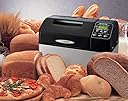


Zojirushi Home Bakery Supreme Breadmaker
Product ID: 300886
Details
- ColorBlack
- Item Weight19.5 pounds
- MaterialStainless
- Product Dimensions8.5"D x x
- Voltage120 volts
🍞2-lb loaf capacity
📟Easy-to-read LCD panel
⚙️10 versatile baking programs
Desertcart purchases this item on your behalf and handles shipping, customs, and support to QATAR.
🍞 Elevate your home baking game—because fresh, flawless bread waits for no one!
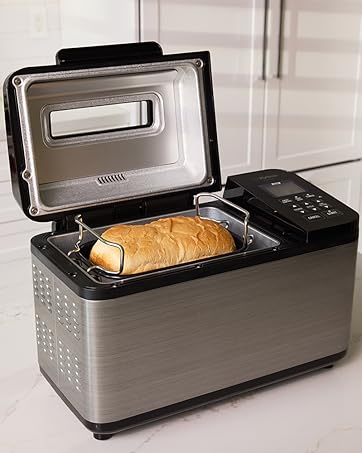
The Zojirushi Home Bakery Supreme Breadmaker is a professional-grade, versatile bread machine featuring a 2-pound loaf capacity, 10 customizable baking programs including sourdough and jam, and an intuitive LCD control panel. Designed for easy cleanup with a non-stick pan and slow-start kneading to minimize flour dust, it produces beautifully shaped, golden crust loaves perfect for sandwiches. Its durable stainless steel build and thoughtful design, including an angled viewing window and lid that stays open during kneading, make it a top choice for millennial professionals seeking convenience, quality, and artisanal results at home.


| ASIN | B002XVUAOU |
| Best Sellers Rank | #46,156 in Kitchen & Dining ( See Top 100 in Kitchen & Dining ) #33 in Bread Machines |
| Brand Name | Zojirushi |
| Capacity | 2 pounds |
| Color | Black |
| Customer Reviews | 4.4 out of 5 stars 3,160 Reviews |
| Global Trade Identification Number | 04974305706843 |
| Included Components | Breadmaker, inner cooking pan, measuring cups, manual, recipe booklet |
| Item Dimensions D x W x H | 8.5"D x 16.87"W x 12.25"H |
| Item Type Name | Home Bakery Supreme Breadmaker |
| Item Weight | 19.5 pounds |
| Manufacturer | Zojirushi |
| Material | Stainless Steel |
| Model Number | BB-CEC20 |
| Number of Items | 1 |
| Number of Programs | 10 |
| Part Number | BB-CEC20BA |
| Product Care Instructions | Hand Wash Only |
| Product Dimensions | 8.5"D x 16.87"W x 12.25"H |
| UPC | 722651276084 083883800752 667562990257 722651279061 721272065671 737989656026 |
| Unit Count | 1 Count |
| Voltage | 120 volts |
| Warranty Description | 1-year warranty |
| Wattage | 700 watts |
P**T
Easiest bread machine to clean!
EASY TO CLEAN One of this machine's standout features is that it is so remarkably easy to keep clean. With my past bread machines, their paddles (that knead the dough) were a misery to clean (think toothpicks and dough-goo). The Zojirushi's paddles, when briefly pre-soaked, easily rinse clean inside and out. With past machines, the baking cavity, observation window, and the baking pan quickly became caked with flour dust. If I didn't wipe the interior of the machine out frequently and thoroughly (an annoying task), my kitchen would smell of burning flour when I next baked bread. The Zojirushi eliminates this problem, by beginning the knead cycle at a very slow speed that doesn't kick up flour dust. Once the flour and water are combined the knead speed increases. Because we eat a lot of bread, I also very much appreciate that this machine makes a larger 2-lb loaf, and that the loaf is traditionally shaped for sandwiches and Panini. RECIPES (that work with this machine) For those of you that are new to bread machine baking, I recommend two places where you'll find recipes that work well with this machine. First, The Bread Machine Cookbook (2005 release) by Donna German includes three loaf sizes for every recipe, and the Large size works well with the 2-lb Zojirushi. Second, the King Arthur Flour site includes bread machine recipes (bread, desserts, meatloaf, etc.), that have been tested in Zojirushi bread makers. FLOUR (try different brands) I also suggest that you use a good quality bread flour. Over the years, I've tried many brands of commercially available flour, and have come to agree with reviewers that different brands of flour affect the taste of your bread. Based on my experience I've found that I prefer King Arthur Bread flour. DIGITAL SCALE (very helpful) Finally, I recommend you purchase an inexpensive kitchen scale (like the Ozeri Pronto Digital Multifunction Kitchen and Food Scale, in Elegant Black that I use) to measure your flour. With a bread machine, it's nice to be able to dial in a recipe and then repeat it time after time, without having to hover over the machine to see if it needs more flour or water. After I purchased the scale, I learned why our loaves had such variability: my spouse's cups of flour were running from 5.5 to 6 ounces each and mine about 4.5 ounces. The scale allowed us to determine the optimum amount of flour needed, and use that amount each time. It also allows me to match the recipes on the King Arthur Flour site, since they provide the option of measurements in ounces. And if you're thinking that using a scale seems like too much fuss, it actually makes the process easier. I place a small mixing bowl on the scale (then zero out the weight of the bowl), and pour flour into it directly from the bag, until I hit the ounces I'm looking for, and...happy days...no cups, no leveling over the bag, no cleaning up spilled flour. I then add sugar and salt, and pour the contents of the bowl into the bread pan. SAVINGS (eventually) If you're like me, initially, you'll try lots of recipes. Eventually, you'll settle on a few favorites and begin perfecting them for your bread maker. The quality of the bread makes the effort worthwhile as well as the cost per loaf; however, before you jump to the conclusion that a bread machine will result in a cost savings, you need to factor in the cost of the bread machine. For example, I was paying $6 a loaf for artisanal bread at the local grocery store. A cost-benefit analysis showed that I had to use the bread machine to make about 45 loaves of bread to get to the point where I was spending less to make bread versus buying it at the store. Since we make bread and rolls several times per week (sometimes per day), it didn't take long for us to recover the cost of the bread maker and see a dramatic drop in the cost of our bread.
E**N
Straightforward durable bread maker
We have been deciding between this bread maker and the upgraded virtuoso plus bread maker. Both are excellent. I like to read reviews but also take with a grain of salt. Really not sure why some people say they never have good bread come out of this machine. Just your basic bread from the recipe book is simple and comes out great. We’ve done several other recipes of our own as well, no problem. As for this bread machine, I really liked its size. Yes, it’s heavier but at least five pounds lighter than it’s upgraded partner. And an inch shorter and narrower as well. If you think you might like putting it away in a cupboard regularly, it’s easier to pick up. I like how the lid opens. Makes it easier to see inside. Also the window is angled better to see inside. It also won’t stop kneading when you open the lid. I like that if I really want to see how things are going. Sure it will let out a little heat but it’s a nice feature that the upgraded version does not have (it will stop when you open the lid). We love to make sourdough and with a recipe I found online, it makes a nice sandwich style sourdough (no yeast). The custom options allow you to let it rise for 24 hours. I don’t need that much but it’s nice that it can rise for a while if you’re doing a custom loaf. We also do a sourdough that we bake in the oven at the end. It does a great job kneading and rising. I don’t love the beeps but it’s not a big deal. Sounds like a microwave beep. I wish that you could go forward and backwards with your selections. The interface on the upgraded virtuoso machine is much nicer. It will not give quite as consistent of a golden color on the top of the loaf as the upgraded machine that has the heating element in the lid but honestly, the bread tastes the same and just as good. It’s more of an aesthetic thing (at least as far as we’re concerned). I also wish you could bake longer than 70 minutes but so far, we haven’t actually needed it to go longer. For us, deciding on this machine came down to size and weight. At the time of buying, both were on sale and about $50 difference.
L**N
Well Worth the Price
This is my second Zojirushi and I cannot recommend it enough if you plan on baking your own bread. The bread shape is the best and closest to store bought bread and the machine is reliable. It is worth the price. I make whole wheat breads and I highly recommend weighing instead of measuring. The bread will come out consistently lighter and well shaped. As well as a good scale, I recommend you also get a good slicer. I got one of those slicers with the hand crank and it slices the breads from this machine easily into 1/2 inch slices like the bread you buy at the store.
S**T
Best kneading, light top crust, GREAT BREAD!
THOROUGHLY RESEARCHED BREADMAKERS BEFORE I TOOK THE LEAP I have been using this Zoji daily for a month and am very pleased. I have 4 decades of home bread baking experience and have tired of the kneading process, although I still love shaping loaves and rolls and pizza crusts. Before I made this purchase, I researched breadmakers and bread machines everywhere I could--in books, on websites about breadmaking and flours, at Amazon (where the reviews are always the most enlightening), at retailers online, and in brick & mortar stores. Analysis of the qualities of this Zoji led me to make this purchase and I was lucky enough to make my decision when the price was as right as it was going to get. Quite obviously, the Zoji isn't cheap, but it is a great value. And value matters more to me in the long run. QUALITIES THAT SOLD ME: HORIZONTAL BREAD PAN, 2 KNEADING PADDLES, GREAT TEMPERATURE CONTROL The main qualities of this Zoji that finally convinced me were the longer, more horizontal bread pan, the two kneading paddles, and the detail about temperatures and times for each phase of the Zoji process (these are available in the Zoji manual on their website). I have to admit I was also influenced by the King Arthur Flour blog and several related posts I ran across (google "king arthur flour zojirushi test kitchen" for some fascinating observations). What you get with the Zoji is a machine designed by people who know what they're doing in terms of gluten development, temperature control, and rising times. VERSATILE MACHINE TAKES THE PROCESS TO COMPLETION WITH FLYING COLORS The Zoji is perfect for me. The two kneading paddles thoroughly develop the gluten and work the dough into a smooth, even textured ball so that I may shape the rolls or loaves myself. Or I can let the machine do ALL the work. I don't know how Zoji has managed it but the loaf is beautifully shaped by the machine just before the final rise. I often open the lid at that point and sneak in with a knife to make some slashes across the top of the loaf to give the bread a more handmade look, but I don't have to do this. The Zoji, unlike any breadmaker I've tried before, is perfectly capable of taking the breadmaking process from start to finish all by itself while still turning out an exquisite product. It is a tremendous time-saver. You really can set it and forget it. BETTER FLAVOR DEVELOPMENT THAN HANDMADE! The thorough kneading and three rises that the Zoji gives the dough make the flavor of the finished bread richer and more complex. The controlled temperatures at each phase of the breadmaking process lead to a beautifully-textured loaf. The recipes that are included are wonderful. But I have to admit that I prefer to use my own combinations of kefir, eggs, less salt, whole wheat flour, and yeast. The Zoji still gives great results even though I don't measure my ingredients. EASY TO CLEAN Before each use, I pour a bit of canola or olive oil on the posts where the two paddles will be inserted. Then I place the paddles on the posts and pour in a bit more oil. I am careful to keep the amount of oil to a minimum so that the bread does not get oily. I then reduce the fat in the recipe by the amount I used to pre-oil the paddles and posts. By doing this step first before I add any other ingredients to the bread pan, I find that the loaf slips effortlessly from the pan, the paddles slip easily off their posts, and nothing requires washing. A quick wipe with a moist cloth is all that is required for clean-up. When I made bread by hand, there was a lot more washing to do at the end. Now instead of washing dishes, I get to sit down and enjoy a slice of hot, crusty, steamy bread. Delicious and easy! CLEAN, UNOBTRUSIVE APPEARANCE ON THE COUNTER The Zoji is also a very good-looking countertop kitchen appliance. Since I use mine so often, I never put it away. The fact that the breadmaker is so handsome is just one more quality in its favor. ONE IMPERFECTION: THE TOP CRUST DOES NOT BROWN ENOUGH ON ANY SETTING My only complaint is that the top crust does not brown as nicely as I'd prefer. But this is a minor problem. The bread tastes GREAT. The top crust is acceptable although not perfect and could be corrected with a few moments under a broiler. The flavor and texture of the bread are just outstanding. FIVE STARS ANYWAY! I would like to have given 5 stars, but I think the Zoji designers really ought to be motivated to tweak their awesome bread machine so that it is absolutely perfect. Aw what the heck, the Zoji is so great, I'm giving it 5 stars anyway!!!
A**A
Great once I got through the complicated manual
I am a fairly experienced baker who can modify recipes to use what is on hand and still end up with a tasty product - MOST of the time! Received my Zo two days ago, fully intending to make bread immediately upon receipt. After all, I owned a DAK bread maker for years and had consistently good results, even with the gluten-free recipes that I have begun using in the last two years. When I ordered the Zo, I also ordered "125 Best Gluten-Free Bread Machine Recipes" by Donna Washburn, Heather Butt, Mark Shapiro and Colin Erricsson. Both arrived quickly and in good shape. But when I unpacked the Zo and began reading the manual, I slowly began to realize that I'd entered a whole new realm of bread making. We aren't in Kansas any more, Toto... this was w-a-a-a-y more complicated than the days of making bread even by hand (which I hadn't done for years since the DAK was so extremely simple to use). The instructions for the Zo are very specific about the temperature and freshness of ingredients, as well as how they are put into the machine. With the DAK, I never worried about the temperature of any ingredients except that I tested the water on my hand to see if it was warm enough (but not too hot) to activate the yeast. Measuring was less than perfect, everything was dumped in together, I pushed a few buttons, and a few hours later, I had fresh bread. I was a little more careful with measuring for the gluten-free recipes, but still basically threw everything in the pot and walked away. Feeling a smidge intimidated by the Zo manual, I decided to read some of the recipes from the 125 Best book. Talk about going from the frying pan to the fire! These authors recommend warming the eggs to room temperature (seriously??), programming each cycle in the process separately, opening the machine after kneading to remove the paddles... sheesh, why would I buy a breadmaker if I wanted to stand over it and do all that? But I began to doubt myself and wonder if I should have just bought a cheaper model that didn't expect so much out of me. It took me two days to work up the courage to try the darn thing. To go easy on myself, I bought a Bob's Red Mill Mix (Hearty Grain Gluten-Free), figuring that there was less measuring and worrying about the right temperature, since I store most gluten-free ingredients in the freezer as recommended. Well, I followed the Bob's directions exactly (no egg warming needed), and also followed the Zo manual as to the order of placing the ingredients into the pan. I chose the Quick cycle, pushed Start, and held my breath. The Zo began the preheat cycle, which "stabilizes" the ingredients to optimum temperature. After about 5 minutes, the motor kicked on quietly and began mixing. WOW - my DAK always sounded like a weed eater had gotten loose in the kitchen. The Zo was barely audible from twenty feet away! When it started beeping to let me know that I could add nuts, fruit, etc., I was pleasantly surprised. This was not a loud obnoxious beep as others have stated in their reviews. Maybe Zo has changed this feature due to prior complaints? Not sure, but it's not a problem with the machine I received. When the moment of truth arrived, I opened the lid and tested the loaf temperature with an instant read thermometer. It read 200 degrees. According to the 125 Best book, I should have left the bread in the machine on the Keep Warm cycle until it reached 220 degrees, since that is allegedly required for gluten-free breads to be fully baked. However, since I'd already turned off the machine before opening (per instruction manual), that option was foreclosed. Oh well, too late. When I removed the baking pan and turned it upside down, the bread came out with a few shakes. The top was a little misshapen, but I've bought bread at the store that was far worse as to shape. This stuff smelled so great that we cut off two pieces immediately. Guess what? THEY WERE PERFECT! So, contrary to the instructions in the 125 Best book, I did not warm the eggs, did not program each cycle to run separately, did not remove the paddles, and did not smooth the top of the bread. I did reach in once during the first minute of mixing to scrape some flour off one side of the pan with a silicon spatula, because the 125 Best Book insists upon that for each recipe. Next time, I won't do it and we will just see what happens. Clean up was easy until I tried to clean the posts to which the paddles are attached. This was tricky, since no scrubbing is allowed, and the posts have a few crevices that need close attention to get all the crusties out. But other than that, this whole thing was way less complicated than it had been made out to be. I am VERY happy! When I have tried some of the recipes from scratch, I will add some updates to let you know if they work as well as the Bob's Red Mill Mix. UPDATE July 11, 2011: I've been using the ZO regularly, making bread from scratch and from mixes (mostly Bob's). I've completely ignored all the dire warnings about warming the ingredients to room temp, since the ZO has a preheat/warming cycle built in. I've also ignored all the warnings about super-exact measurements, super fresh yeast and flours, etc. (I do store my flours in the freezer and my yeast in the fridge, however). I also refuse to use egg whites, and have substituted one whole egg for the two egg whites in most of the gluten-free recipes. This does require me to use the lightest crust setting to avoid crusts that are too dark. Despite all this rebelliousness, every single loaf has turned out GREAT! Unlike some of the other reviewers, I really don't care about the holes in the bottom of the loaf from the paddles. I really don't care about having a perfectly shaped top, either. The bread tastes great and works much better for sandwiches than most of the gluten-free bread in the store. Plus, it doesn't have any weird chemical ingredients, either. I've also experimented using the Quick Cycle and a custom-programmed cycle as recommended by the cookbook (see above). The bread turns out the same either way. My advice to those wanting a bread-maker for gluten-free baking: Go with the Zo!
K**A
Worth the money for it's durability!
I have this same bread maker for 14 years and even with continuing use it works and looks like new. There is a lot of pre-programmed options, and more that you can program. Easy to use. Comes with the basic recipes, that when followed give you perfect breads. The kneading is great! If you have arthritis like me, this part of any bread making can be done by this machine and less dirt things to waxh than with a mixer. It gives you a lot of flexibility while making the dough and loaf. The only thing I wish the bread could be a little longer. It can be a little hard to clean under the heating element, but it's worth the trouble. It's more expensive than others, but it will pay off itself by its durability.
A**I
This is not the machine for experienced bakers!
I purchased this machine to replace a Welbit bread machine that I had received as a gift back in '93 and have since nearly worn out. I read all of the reviews and had decided to go with the Zojirushi because it was highly rated. I should have read the negative reviews more closely because I experienced everything noted in those reviews. I got the machine on a Saturday and had paid more for 2 day shipping so that it would arrive in time to be the third machine to help with a big bake sale that my niece and I were doing. The machine arrived and I read the manual closely--taking an hour away from baking that I could not afford. Let me say here that I am an experienced baker and have been using a bread machine for over a decade and occasionally also bake by hand. The Zojirushi machine simply does not work up to its "reputation" and certainly not up to its cost! I placed the ingredients in the machine in the order noted in the manual and demonstrated in the video that comes with the machine. The first loaf of bread--maple oatmeal--was not browned on the top and had a crown that sunk. It was edible but certainly not something we could sell. I decided to try another bread before I threw in the towel and attempted to make a simple raisin bread. Again, disaster. This time not only did the crust not get dark--even when the setting selected was for a dark crust--but again a sunken crown. It was then that I read the negative reviews and found out that experienced bakers had noted the same problem. I should have paid more attention to the negative reviews. I immediately packed up the machine and returned it the next week for a refund. I can only surmise as others have who gave the machine poor ratings that the positive reviews must be from inexperienced bakers or from those who can't fathom that they can pay over $200 for a product and it not work even passably well. I have a 24 year old Kitchen Aid mixer and it's still chucking away. And thank goodness I had it for the bake sale because it was a workhorse, mixing double and triple batters and even kneading dough after I realized that the Zojirushi would be of no help. Unfortunately the Welbilt is no longer manufactured so I'll have to find another machine. But $230 for an appliance that simply is not well made or functions as it should is unacceptable. The week before I got the Z machine I found a machine in a thrift store for $3.88 and it works better than the Zojirushi!!! I guess the lesson here is that you don't always get what you pay for. And by the way the bake sale was fabulous thanks to the old Welbilt, the Kitchenaid mixer and good old fashioned arm power.
B**L
Update 12 years later.... Just get it.
Update: I'm technically on my 12th year now, bought this May 2, 2003. I use this bread machine often, about 2-3 times a week. Sometimes for dough, sometimes for banana bread on cake mode, often for simple breads. I've probably saved thousands on bread products over the years. Zojirushi is a great brand, I have 2 of their rice cookers, which are also phenomenal. Wishes are that this has a dumper for warm yeast water (I like extra foamy yeast, sugar, milk powder, fat mixture), a dispenser for add one like nuts and stuff, and one day a more robotic approach for baguettes and whatever - or make the dough, rise for 8 - 12 hours, dump a baguette into a cooking surface. We can dream right? Original review from 2003... Okay, so I waited for months and months to get this, and finally saw one from Amazon Warehouse Deals that was about a hundred dollars less than the current Amazon price.... it arrived, was in perfect condition (I think it was just a returned item that was never used), and in a few minutes I was using their basic bread recipe.... first loaf was a disaster, but I was using old flour and old yeast that had been in my cabinet for at least a year. I went to Costco, bought a 25 pound bag of bread flour and a giant package of yeast, and have now made 4 loaves in the past 3 days... as well as sourdough starter. Their "basic sourdough" recipe is amazing - the bread is chewy and elastic, and tangy, and perfect. The loaves come out great, everything is perfect. If I were to change a few things: * a nicer display... sheesh, if a $69 printer can have a full color touch screen, this can too... * the ability to make a 1 pound loaf and a 2 pound loaf.... perhaps it's possible just with a smaller recipe? I was thinking about this forever, and really, these 2 pound loaves are pretty sizable, but I'm always making people happy by giving away bread... perhaps have this come with two pans? UPDATE: it's possible, they just dont look as pretty without that "muffin top". * what's with Zojirushi and their weird measuring cups? I have their rice cooker (another one of god's greatest essential appliances, trust me), and it has this special measuring cup too... Anyway, buy this bread machine - if you don't like it, return it or sell it... but you're going to love it... especially after that first loaf of mouth-watering sourdough bread! UPDATE! Zojirushi, if you're reading this, I really think that the screen should be a larger screen with a graph of everything that happens from start to end, and when to add items, and show a moving arrow along this line. Also, have the screen have built-in recipes to follow. And if possible, maybe an auto-dispenser for the "add-on" items so you don't have to wait around. So far I think I've made 30 loaves of bread... I bought a 25 lb bag of bread flour at Costco, but also bought 2 bags of flour on amazon (7 grain and whole wheat) and it took me two loaves to realize that you still use 2-3 cups of white bread flour for every cup of whole wheat or multi-grain.... unless you want very, very, very dense bread. ;-) I find if I add items as soon as the "add" beep comes on, that they get pretty pulverized... I wait an extra 3 or so minutes, then add items like walnuts.
F**U
Súper máquina!
Si sigues las instrucciones (porciones y medidas) es una súper herramienta para tener pan recién hecho todos los días en tu casa!
M**L
Great machine right out of the box.
I chose this machine as my 4th breadmaker in 5 years. We have already "killed" a Breadman, a Black and Decker and a TFal. I really hope this one lasts. It certainly feels solid and it is soooo much quieter than any of the others. I used to make sure I didn't have anything else to do in the kitchen when the others were kneading because I couldn't stand the racket. This one I have to check and see if it's working. It does take up more counter space even than my TFal, which was also horizontal, and it doesn't fit in the cabinet spot I had "reserved". But it's worth it. I always have to "break in" my new machines but this time I just used my tried and true family favourite--I do think it's the Canadian flour thing that gets me in trouble when I try the recipes included with the machines. Have also made beautiful bagel dough, and the overnight timer works perfectly. (With other machines the temp has been wrong by morning but the preheat on the Zojirushi seems to make a difference.) I do find the crust a bit light for my taste, but it's not a deal-breaker, and that just seems to be me, judging by the other reviews. I loved that it didn't stink up my house the first time I used it--I expected to throw out the first loaf, just wanted to do a bake and burn off the chemicals. However, the smell during the first cycle was hardly noticable and we've enjoyed the bread from that first loaf. I left the blades in the first time, and was really pleased that they came out without leaving a huge rip in the bottom of the loaf. Generally though I watch the cycle and remove the blades after the final knead. If you haven't used a horizontal machine, it's so worth it to have a normal-shaped loaf, especially if you plan to feed a family regularly rather than just make an occasional loaf. It was expensive, but honestly, why spend so much more for the stainless one? The white one was a relative bargain. Note I've been using it for a couple of weeks now. I hope it lasts, but if it doesn't I will try to get replacement parts and keep going. (I got a replacement part for my old TFal and have it in reserve--getting parts always takes forever and I get impatient waiting--so this time I have a backup if I have to replace anything on this one.) Editing 5 months in...still loving this machine, absolutely no issues with it. It's quiet and reliable. My favourite bread machine so far. I can see that the paddles might wear, there is a little wobble starting to show in the way they fit, but I did see replacement paddles somewhere...
J**N
Simply the best.
I bought mine (Zojirushi BB-CEC20WB Home Bakery Supreme, White) three weeks ago. Before that, I had a few other bread makers (vertical Philips Deluxe, Horizontal Philips, Tefal home bread baguette bread maker) and had a close look at pretty much every model available at Sears, Canadian Tire, Walmart, Costco and Zellers (Cuisinart, B&D, West Bend and so on). Most bread maker models had a remarkably low quality with poor design, disgusting appearance, cheap knobs falling out or in, poor coating, sharp edges, aluminum or plastic transmissions and even plastic kneading blades (!). Before Tefal, I also bought the famous Kitchen Aid mixer, quite advanced, expensive and powerful (600 Wt) model, but, surprisingly, it could not prepare whole wheat dough properly, the process was quite messy, aluminum hook etc., so I returned it back to the store. In between, I was making bread manually. Thus, my impression is that for making bread and moderate amounts of dough, a good bread maker seems to be the best choice. To my experience, the main problem with more or less decent bread makers, like Horizontal Philips or Tefal baguette, is that even though the bread maker itself still works fine, the companies are no longer supplying spare parts, particularly bread pans and paddles. So after a while, usually when the bread pan starts leaking in a year or two, the whole machine becomes almost useless. Thus, having spare parts was a big plus for considering Zojirushi. Yet another was composing custom programs. The price... Well, Tefal cost $199 ($149 on sale) when I bought it, Horizontal Philips was $149. Zojirushi cost $214, now it costs $189. There is some difference indeed, but Zojirushi design is far superiour. Now some of my impressions. First of all, the Zojirushi unit is very well balanced and is NOT moving during kneading. Most other bread makers I tried, except Tefal baguette, tended to move (which means a good chance of falling off the shelf or table, running into something, falling into the kitchen sink filled with water and dishes, plugging themselves out and so on). The Zojirushi is quiet. In fact, this is probably the least noisy bread maker I have used. The unit is decently designed. It fits nicely under the kitchen shelves. The lead does NOT tend to fall onto your fingers when you open the bread maker. By the way, Tefal baguette rack fits well into Zojirushi, too. Zojirushi remembers not only the last program used, but also its modifications, like preheat on or off, which is convenient. In other bread makers, browsing through beeping menus every time the unit is on seems a bit annoying. Quality of dough and bread is good even for standard programs and an average "Selection" or "Compliments" flour from Food Basic or Price Chopper. The crust is NOT too dark if "light" is chosen. The loaf is NOT too heavy. I think the problems other folks have reported (the crust was too dark or uneven, bread much higher on one side, too hard etc.) were mostly due to their recipes or measuring errors, - if their units are not lemons, of course. Mine is apparently not. That custom programming allows to bake beautiful loafs, perfect, absolutely fantastic. To illustrate what can be achieved by using the breadmaker's custom programming, I have added some images to the "Customer Images" section. They clearly show a good performance of the machine even in preparing some of the healthiest and best tasting (but also most demanding) types of bread, including old Russian style rye sour dough bread and whole wheat sore dough bread. Recipe book and the instructional DVD are nice to have, even though I am mostly using my own recipes. The paddles are made in such a way that they do not stick inside the loaf - a really nice feature that I have not seen in any other bread maker. Cleaning the pan is exceptionally easy comparing to the other brands. Just soak for half an hour or so in warm water, the blades are going off easily. Now some potentially weak points. The bread pan will probably need a replacement in a year or two - but this is true for any bread maker I have seen. A stainless steel pan and paddles, by the way, would make the breadmaker even more attractive. There are no additional side supports for the bread pan (thus the bottom mount experiences higher loads), - but, on the other hand, it makes the pan insertion and removal more convenient. Nice looking, well designed, convenient, reliable, fool-proof. In summary, this is the best bread maker I have ever had. ~~~~~~~~~~~~~~~~~~ After a while ~~~~~~~~~~~~~~~~~~ December 2, 2012, more than a year after my happy purchase. As I expected, the bread pan and the paddles proved to be the weakest point of the bread maker. After I paid a ridiculously high cost of the replacement pan and paddles (around $110), I found that the replacement blades themselves, like the original ones, are also being heavily worn during mixing, especially at their upper part, from inside the hole. Since they are made of aluminum, it results in releasing of toxic aluminum into the food, which is not acceptable. I could only wish both the pan and the paddles were made of a less toxic material. In the meantime, I simply took off the blades. Now I am mixing the dough manually in a ceramic bowl (it takes about 5 minutes), then I put the dough in the pan with the blades removed and launch a simple custom program (say, 20 min preheat, 2 hrs to 2 hrs 30 min rise and 1 hr 10 min bake). Thus, no mixing, no toxic metal release in my food and no wearing of the precious bread pan. By the way, it seems that release of aluminum into the food is a common problem for all bread makers, since the pan and paddles are made of aluminum and are wearing out while mixing the dough. Since aluminum is heavily used in food industry, commercially available bread is probably contaminated with aluminum, too. Fortunately, the design and programming of the Zojirushi bread maker was flexible enough, so I could circumvent the aluminum problem. For that custom program, the machine also allows to set the crust control. I noticed that after the brief manual mixing, the bread rises less than after the machine mixing, which may sometimes be even advantageous. The texture and taste are also different, but very good, too.
A**G
Perfect for Gluten Free Baking
I purchased this machine given the number of internet reviews specifically for gluten free break baking, so this review will be specific to this, as I haven't used it for anything else. The double paddle design is perfect for gluten free bread dough, as, for those of us who have done it by hand, you know how much mixing is required, and how gluey the dough can get. Despite the double paddle (which reverses direction every so often to avoid piling the dough up on one side) you do still need to give it a little push mid way through mixing to ensure all the flour and starch is incorporated into the dough...not a big deal, at all. Something to consider if you expect to throw everything in and use the timer function. Although if you use fresh eggs in your recipes, you can't do this anyway, or the eggs will likely spoil. I love the horizontal loaf pan! I used to use another bread machine that made those torpedo loaves, but it didn't really cut it for gluten free breads. I've been using recipes from a gluten free bread recipe book that includes bread maker instructions for my main recipes. I find the gluten free recipes included in the manual are too rice flour based for good bread, and are too gritty, like rice flour bread generally is. I just follow the machine instructions for the order for putting in the ingredients, and use the recipe book measurements. Works perfectly! This is the recipe book I've been using --> The Gluten-Free Gourmet Bakes Bread: More Than 200 Wheat-Free Recipes Given that gluten free dough doesn't need a second rise like wheat dough does, there is a program function that will allow you to turn off the second and third rise, and program the amount of time the machine prewarms, mixes, and bakes. The crust selection is also handy, although I find I typically use the medium selection all the time...but it gives you the option for darker or lighter crusts, depending on your tastes. That being said, the quick wheat selection does well for my recipes...all I do is remove the paddles using teflon coated tongs once the mixing cycle is complete (plus it also keeps the big paddle holes from forming in your finished loaf). It also beeps during the mixing setting to alert you to when you can add seeds, nuts, fruit, etc to your bread, should you want to. You can't turn it off, though... The only drawback is that it is more expensive than most other bread makers on the market. Personally, I think it was a great investment for me. Gluten free breads are notoriously expensive to buy, and I love the fact that I don't have to heat up the house, especially in the summer, to bake a loaf of bread in the oven. Once the mixing is done, I can just leave it to do its thing for the rest of the time it's baking. It's fairly quiet while it's mixing...I think my microwave is louder when it's on. I love this breadmaker, and have been incredibly happy with how the gluten free loaves have turned out.
L**B
A Year+ Later
I've had this bread machine for over a year and I use it at least once a week. My standard recipe is a simple sourdough on the regular setting (I've never tried the sourdough setting – it seems like a useless extra), plus pizza dough and various ryes and brown breads when I'm feeling adventurous. My standard recipe plus the pizza dough never fails. I purchased the Zojirushi after a lot of research. My previous bread machine was a refurbished Regal model that lasted over ten years. The Zojirushi came up as the premium model with good reviews on many sites. I picked it because it seemed reliable, I liked the rectangular loaf pan, and it had lots of options. General Observations: Counter footprint is okay – not overwhelming, but not really "space saving" either. Machine looks nice and sleek, a bit like a large lunchbucket. It's heavy, so I keep it on the counter. It's not a small appliance but the shape is narrower than my old breadmaker so I'm happy. I don't bother with the room temperature thing where you have all the ingredients sit in the pan so they get to the same room temperature. It takes a little figuring to turn it off, but once it's off, it stays off. Otherwise, the bread would take almost 4 hours to make. Advance setting (future bread timer) has screwed up once or twice and baked unmixed bread. I'm not sure that I can blame this on the machine, though. I've never put the pan in the dishwasher. Doesn't need it – it cleans up quickly. I'm able to "read" dough and don't bother too much with the exact proportions or how the ingredients have to be layered. I throw them in any which way and it always works. However, for delayed baking, I tend to follow directions exactly and have had some misses. Pros: Loaf pan is awesome. I've NEVER had a loaf stick or break when removing it from the pan. Bread comes out smoothly each and every time with a few shakes. I can't say enough about this feature – it's probably the most important part because it's the everyday convenience. Dual paddles, yay! And they have never needed to be pried out of the loaf. Not once. Excellent directions. Clear, colorful, easy. Never had a loaf over-rise and flood the container, which happened a lot with the old one. The capacity of this one seems perfect. Cleans up like a dream. Rinse a few times, done. Dough setting has always made perfect dough. Predictable and easy to watch whether you have the window or the lunchbucket-like roof open while you're monitoring the consistency of the dough, which I recommend you do. Consumes less electricity than my old model (doesn't trip my circuit). Cons: It's complex – almost too many settings to cycle through, but the directions are excellent. No small (1 lb or 1.5 lb) loaf setting. However, I've ignored the directions and made smaller loaves and they seem to be okay. Jam setting really doesn't work, but I am not an expert and suspect jam just has to be made on a stove. Not as fast as my old Regal – about three and a half hours instead of the usual 2:15 I was used to, but bigger loaves. The 2 hour "speed setting" makes pretty crappy bread. Don't use it. Loaves come out slightly uneven as others have observed but this really doesn't bother me. The coating on the upper corners of the pan is cracking slightly – kind of like a wrinkle? -after a year's use. This does bother me. Conclusion: was it worth the extra $? I am not sure. I know that I am absolutely in love with the loaf pan and the structure. The thing that used to drive me nuts with my old breadmaker was how hard it was to get the bread out. I would easily pay $ for the dual-paddle loaf pan but, in retrospect, I wish I'd gotten a smaller machine with the ability to make faster/smaller breads. But only if it has this loaf pan. Anyway, so far, so good. It is easy to use so it gets a lot of use.
Trustpilot
1 month ago
3 weeks ago